Tour Tracker Origin Story
“We need to spend $200,000…”

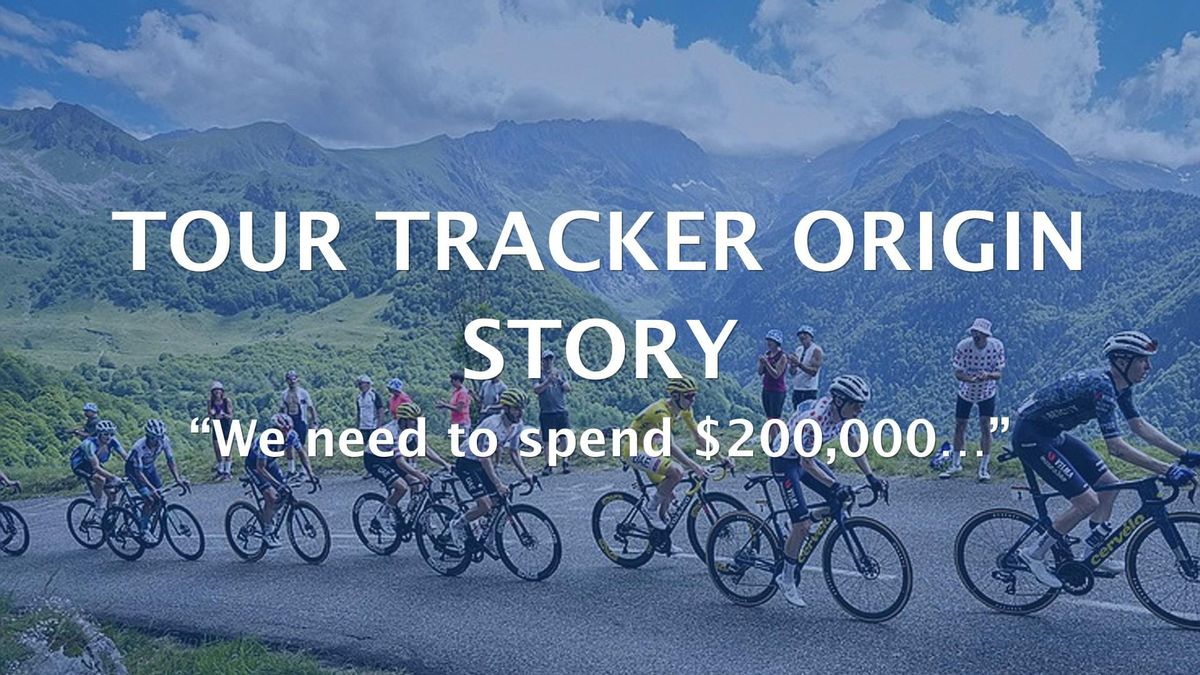
“We need to spend $200,000…”
That was basically the message that came down from Allan Padgett’s boss at Adobe sometime around the year 2007. At the time he was part of the company’s design team but his boss was a huge cycling fan.
“He was a serious cyclist when he was younger, and he had raced semi-pro. It was the end of the fiscal year, and we had a $200,000 marketing budget. Anh he said ‘If I don’t spend it, they won’t give it to me next year.’ So he reached out to Amgen.”
Amgen was about to hold the inaugural Tour of California, a seven stage, 700-mile approximation of the big European events that had been the backbone of professional cycling for decades. The timing worked out and suddenly the race now included the Adobe Most Aggressive Jersey. But that wasn’t the only thing Adobe brought to the table.
“Adobe had just bought Macromedia, and we were looking for a way to showcase what you could do with Flash. And the way we did it was to get one engineer and one designer and have them sit down for a month and see what they can build.”
That initial version of the Tour Tracker began to turn heads in the cycling community. At that point the Tour of California had zero TV coverage, so any kind of live insight into what was happening in the race seemed almost other-worldly. With the nascent Tour Tracker serving up video and map content, it was as if pro bike racing entered a completely new era.
By 2007, the coverage expanded to tracking individual top riders who would carry a device in their jersey pocket to help fans keep track of where they were on the course – that is when they cooperated. Discovery Channel’s Levi Leipheimer infamously chucked his tracker into the woods during one stage of the race, that resulted in a number of production resources having to scour the roadsides to see where it landed. But inconvenient or not, it marked a milestone in the sport.
“It was literally the first time anyone had ever geo-tracked any bike race. It was also the first time anyone had custom maps doing this kind of stuff, because back then Yahoo had yet to allows external developers and third-party applications to communicate with their company’s database. So they said ‘We’ll tell you what URLs to use, but we can’t draw the routes. You’ll have to do that yourself.’”
But by that point some of the bigger players in the sport had taken notice of what was going with Adobe’s latest development and before long the owners of the Tour de France asked Tour Tracker to work with their broadcasters. This was like the major leagues…like the NFL…this was the pinnacle of bike racing worldwide. But with a bigger stage, there were often bigger headaches.
“During the phase when I was providing official coverage for NBC and (Australia’s) SBS, things would occasionally go wrong with the Tour de France’s official data feeds. So ultimately, it would come down to NBC calling me and asking, “Where is our live coverage?” While we didn’t provide the raw stream itself, the only way you could watch the Tour de France online in the US was through NBC, and that was all Tour Tracker.”
Not too long after a new race based out of Colorado was hatched that would take Tour Tracker to an even wider audience – the USA Pro Cycling Challenge. And it was at this point that Padgett realized that this was becoming more than a fun in-office project.
“I thought to myself, ‘I just want to work on this full time!’ And I talked to my boss and he said that I had his full support to take the code and go solo as long as legal signed off on it. At that point, I’d been at Adobe for a decade, and I was friendly with the founders. So everyone supported this idea of going off to get Adobe more exposure in the sporting world.”
With the Tour of Utah also coming onboard with Tour Tracker, all three major American cycling events were providing cutting edge live coverage of their race. The operation grew into a collection of satellite specialists, data wizards and seasoned cycling journalists all corralled into one multifaceted production team working countless hours to bring the sport directly into the hands of racing fans everywhere. The achievement wasn’t lost on Padgett.
“There would be moments of joy when I would be in the operations truck and it would just all be working. There was just this feeling of watching the team work together, actually seeing it show up, and think, ‘I built this.’ There’s this pride in every once in a while of realizing, ‘Huh, I built a really complicated system, and people are enjoying it.’”
But the feedback he would occasionally get from fans would be even more impactful.
“”By far, my biggest joy is getting friendly emails from users. I get messages from people who are in wheelchairs because of a bike wreck, saying, ‘Thank you so much, this is the only way I can stay in touch with the sport that I’ve loved my entire life.’ Or when I hear from an extended family that all plays fantasy cycling together while their kid has a genetic disease. And it’s that personal connection…where I realize that ‘Wow, I have actually made someone’s life better.’”