Tour de France: Ten Crazy Days
The most surprising days in Tour de France history

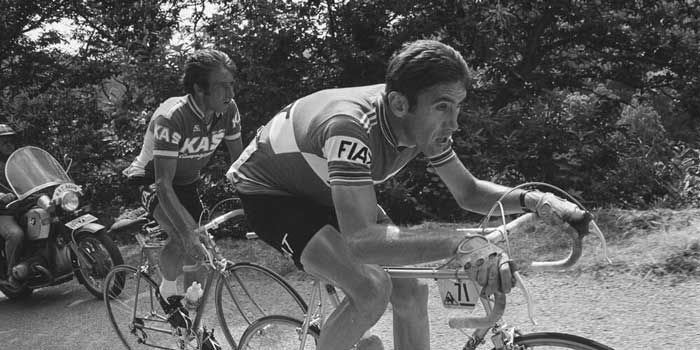
The Tour de France is the most rehearsed sporting event on earth. Routes are surveyed years ahead. Teams arrive with binders of power data, dossiers on every climb, radios in every ear. By the third week, the favourites have usually been sorted, the gaps measured, the winner all but engraved. And then, on some unremarkable afternoon between a feed zone and a finish line, the whole apparatus of planning simply falls apart — and a race that prides itself on order produces something nobody could have scripted.
What follows are ten of those afternoons. They are not ranked, because there is no honest way to weigh a man’s death against a dropped chain, or a miracle survival against a scandal that nearly killed the race itself. Instead they run in order, 1904 to 2019, so you can feel the long arc of the thing: how the Tour keeps finding new ways to astonish the people who thought they had seen everything. Some of these days were tragedies. Some were farces. One or two were close to sporting perfection. All of them are days when the Tour stopped being a bike race for a few minutes and became something stranger and larger, the kind of story people still argue about decades later in the bars of Ghent and the cafés below Ventoux.
1. The Tour that ate itself — Stage chaos, 1904
The Tour was one year old and already nearly dead.
The 1903 race had been a triumph, a circulation stunt for the newspaper L’Auto that turned into a national obsession. So a second edition was inevitable, and Maurice Garin, the chimney-sweep turned champion who had won the first Tour, came back to defend his title. He duly won again — by a small margin, with Hippolyte Aucouturier taking four of the six monstrous stages.
Except he hadn’t won anything. The 1904 Tour was a festival of cheating and violence so brazen it reads now like satire. Riders were towed behind cars. Riders, it was widely believed, caught trains. Tacks and broken glass were scattered on the road to puncture rivals. Partisan mobs barricaded the route in the dark and beat the cyclists they disliked; near Saint-Étienne, supporters of a local favourite set upon Garin and his brother César until officials arrived firing pistols into the air to disperse them. In Nîmes there were stones and a blocked road. The whole spectacle was so out of control that the race’s own founder, Henri Desgrange, declared the Tour finished, convinced his creation had destroyed itself.
The real shock came months later. The French cycling union investigated, heard from dozens of witnesses, and in December — almost five months after the finish — disqualified the entire top four: Garin, Lucien Pothier, César Garin, and Aucouturier, along with a swathe of others. Twelve riders were thrown out in total; the reasons were never made fully public, and the archives were lost forever when they were spirited south to escape the German invasion in 1940. The man who inherited the victory was Henri Cornet, who had finished fifth, nearly three hours down, and who had himself been warned for taking a lift in a car. Cornet was nineteen years old. He remains, to this day, the youngest winner the Tour has ever had — a record that has stood for more than a century and will almost certainly stand forever.
Desgrange changed his mind about killing the race, but he changed almost everything else: a points system for 1905, more officials, isolated mountain passes that crowds couldn’t easily sabotage. The Tour that survived 1904 was, in a sense, invented by it.
2. The man who fell off the Pyrenees and lived — Col d’Aubisque, 17 July 1951
Wim van Est had never seen a real mountain.
The Dutchman — “The Locomotive,” a former wartime smuggler from a family of sixteen children in North Brabant — had come to the 1951 Tour as a strong, raw rouleur, not a climber. Then on the twelfth stage he slipped into a breakaway, won, and gained nearly twenty minutes, and overnight became the first Dutchman ever to wear the yellow jersey. A nation that had never had a Tour leader suddenly had one.
The next day was the race’s first mountain stage, from Dax over the high Pyrenees, and van Est, desperate to defend a jersey he could scarcely believe he was wearing, threw himself down the descent of the Col d’Aubisque behind the great Italian descender Fiorenzo Magni. He fell once and got up. He set off again, taking risks no sane man would take. And then, on a wet, gravel-strewn hairpin with no barrier between the road and the void, his bike went straight on while the road turned, and Wim van Est sailed off the edge of the mountain.
Below him was a ravine that fell hundreds of feet, most of it steep enough to kill. He dropped perhaps seventy metres, clutching at saplings, until by some impossible luck he came to rest on a ledge the size of a chair seat — bruised, grazed, his ankles and elbows battered, but with nothing broken. A Belgian rider was the only person to see him go over. When the Dutch team car arrived, the staff screamed his name down into the gorge and heard only echoes.
What happened next is the part that turned an accident into a legend. The team manager, Kees Pellenaars, fetched a tow rope. It was far too short. So he tied to it every spare tubular tyre the team possessed — around forty of them — and lowered the chain of rubber down the cliff, and they hauled the leader of the Tour de France up the mountain hand over hand. The tyres came back so stretched they were useless, which ended any argument about whether van Est would continue: the team had to withdraw. He wanted to get straight back on his bike. They sent him to hospital instead, where doctors confirmed the miracle — nothing broken.
He recovered, wore yellow again later in his career, and won Bordeaux–Paris twice more. But he was forever the man who fell into the Aubisque and lived. A watch company that sponsored the Dutch team made him the face of an advertising campaign built on the legend: his heart had stopped, the ads said, but his watch never did. Fifty years later, an old man stood at the plaque they fixed to the rock and wept.
3. The Giant of Provence claims a life — Mont Ventoux, 13 July 1967
The doctor knew before the stage even started.
On the morning of the thirteenth stage of the 1967 Tour, the race physician, Pierre Dumas, looked at the heat building over Provence and said, grimly, that if the riders went up Mont Ventoux full of drugs that day, someone could die. It was an era of national teams and casual, ubiquitous amphetamine use, a culture in which managers added brandy to bottles and riders carried pills in their jersey pockets and almost everyone pretended not to know.
Tom Simpson was Britain’s first true cycling star — a world champion, the first Briton to wear yellow, a charismatic, ambitious man who needed a big Tour to secure the lucrative post-race contracts that were a rider’s real income. He had targeted this stage. But he had been ill with stomach trouble for days, and the 211 kilometres from Marseille over the bald, furnace-like upper slopes of Ventoux were precisely the wrong place to chase a result on a wrecked body in 40-degree heat. He had been seen taking brandy from a roadside bar. In his pocket were tubes of amphetamines.
A kilometre or so from the summit, on the white, shadeless moonscape near the top, Simpson began to weave across the road. He fell. His mechanic, Harry Hall, reached him and tried to tell him his Tour was over. Simpson, barely conscious, insisted on going on. They put him back on the bike. The words attributed to him — put me back on my bike — are probably apocryphal, but they capture something true about the man’s terrible determination. He rode a few hundred metres more and collapsed again, his hands still locked to the bars. He could not be revived. A police helicopter flew him to hospital in Avignon, where he was pronounced dead in the late afternoon. He was 29.
The first reports blamed the heat. Within weeks the truth came out: amphetamines and alcohol, combined with the heat and the climb and the illness, had let him push his body past the point of survival. It was, in the most literal sense, the first death on live television caused by doping, and it forced the sport to act. Mandatory drug testing arrived the following year. A granite memorial stands a kilometre below the summit where he fell, and to this day cyclists climbing the mountain stop to leave a bottle, a cap, a token. His daughters added a line to the stone: there is no mountain too high.
4. The Cannibal refuses the jersey — Col de Menté, 12 July 1971
For two weeks, the unthinkable had been happening: someone was beating Eddy Merckx.
Merckx — Le Cannibal, the most dominant rider the sport has ever produced — had won the previous two Tours and was expected to win every one he started. But in the 1971 race the slight, fragile, ferociously talented Spaniard Luis Ocaña had done what no one else dared. On the climb to Orcières-Merlette he had ridden away from Merckx and everyone else in a fog, soloing to a victory so emphatic that he led the Tour by more than eight minutes. The myth of Merckx’s invincibility lay in pieces. Ocaña, who reportedly named his dog “Merckx” so he could order it to heel, looked like the winner of the Tour de France.
Then came the Pyrenees, and a sky that turned black as ink.
On the descent of the Col de Menté, a violent storm broke over the race — hail, then a torrent that turned the clay-streaked road into something between an ice rink and a river of mud. Merckx, being Merckx, attacked anyway, on the descent, in the chaos. It was a wild, dangerous move, and it caught Merckx out first: he lost control and slid into a low wall. He was up and gone in seconds. But Ocaña, following close, went down too — and as he struggled to free his feet from his toe-clips, another rider came hurtling blind around the same streaming bend and smashed into him at full speed. The leader of the Tour de France lay in the road screaming. A helicopter took him to hospital. His race, and his eight-minute lead, were over.
What happened the next day is why this is remembered as one of the Tour’s noblest moments rather than merely one of its cruellest. Merckx had inherited the yellow jersey by default, through a rival’s misfortune, and he would not have it. He refused to appear at the podium ceremony, and the following morning he refused to wear yellow at all, out of respect for the man he believed had been beating him fairly. He won the Tour in Paris, of course. But for the rest of his life he carried a small asterisk of doubt. There would always be a question, he admitted, about whether he had really won it — and whether Ocaña, who finally took his own Tour two years later, might have won this one outright if the heavens hadn’t opened on the Col de Menté.
5. Eight seconds — Champs-Élysées, 23 July 1989
The newspapers had already printed the wrong ending.
The 1989 Tour had been a three-week duel between Greg LeMond — the American who two years earlier had nearly died when his brother-in-law shot him by accident, leaving dozens of lead pellets in his body, some still in the lining of his heart — and Laurent Fignon, the bespectacled, ponytailed Parisian who had won the race twice before. The lead had see-sawed all the way; the two men were never separated by more than a minute the entire race. Fignon took the yellow jersey on Alpe d’Huez, extended it in the Alps, and arrived at the final day with a lead of fifty seconds.
That was supposed to be the end of it. The 1989 Tour did something the Tour almost never does: it finished with a time trial, a short 24.5 kilometres from Versailles to the Champs-Élysées. Fifty seconds over so short a distance, against a rider of Fignon’s class, was considered insurmountable. To overturn it, LeMond would have to find two full seconds per kilometre. French papers prepared their front pages with Fignon as champion.
LeMond got on a strange-looking machine. He used triathlon handlebars that let him fold into a needle-sharp aerodynamic tuck, a teardrop helmet, a rear disc wheel — equipment his critics called ugly and unnecessary and possibly illegal. He told his team car to give him no time checks at all. He simply rode, flat out, with nothing to lose. Fignon, bareheaded, his ponytail flapping in the wind, rode the fastest time trial of his own life — and it was nowhere near enough. LeMond averaged over 54 km/h, the fastest time trial the Tour had ever seen, and as he collapsed at the finish the impossible arithmetic resolved itself. He had taken 58 seconds out of Fignon over 24.5 kilometres and won the Tour de France by eight seconds — the smallest margin in the history of the race, before or since, a gap of a few bike-lengths after more than 3,000 kilometres of racing.
Fignon crumpled to the cobbles. He never quite recovered from it. For the rest of his life, strangers would greet him as the man who lost the Tour by eight seconds, and he had a weary, perfect reply ready: No, monsieur — I’m the man who won it twice. But the eight seconds were what the world remembered, and probably always will.
6. The day the race was raided — The Festina Affair, July 1998
It began at a border crossing, with a soigneur and a car full of drugs.
On 8 July 1998, three days before the Tour was due to roll out from Dublin, a man named Willy Voet was stopped by French customs at the Belgian frontier near Lille. Voet was a soigneur — a masseur, bottle-carrier, and trusted confidant — for Festina, then the number-one team in the world, built around the beloved French climber Richard Virenque. In his car officers found something close to four hundred doses of EPO, growth hormone, testosterone, and other products. It was not a stash for one rider. It was a pharmacy.
What unspooled over the next three weeks nearly destroyed the Tour. Festina’s management, confronted with the evidence and with a document detailing the team’s systematic doping programme — funded, it emerged, directly out of the riders’ own pooled prize money — confessed. The entire team was expelled from the race. Virenque, a national hero, made a tearful, theatrical protest of innocence that fooled almost no one. And then the police kept going: hotel raids, riders taken into custody, more teams searched. The Spanish squads, furious, staged a walkout. On a later stage the peloton itself sat down in the road in protest at the treatment of the riders, and the day’s racing was reduced to a slow-rolling demonstration. Of the 189 riders who started, only around 96 reached Paris. The press took to calling it the Tour de Farce.
The most damning detail of all was the quietest one. Across the whole of that Tour, the official anti-doping laboratory carried out 108 tests. Every single one came back negative — because no test for EPO yet existed. The drugs were everywhere, and the system was blind to all of it. Festina got caught not by science but by a customs officer and a parked car.
The Festina affair was the day cycling’s open secret stopped being a secret, the moment the sport could no longer pretend. It would take years, and many more scandals, before anyone could honestly say the lesson had been learned — and the long shadow it cast over everything that followed is part of why the next entry on this list now has no official winner at all.
7. Melting tar and a ride through a field — Gap, 14 July 2003
It was so hot the road itself was coming apart.
On Bastille Day in the 2003 centenary Tour, the temperature climbed so high on the run into Gap that the tarmac began to soften and bubble; officials were actually hosing down the worst corners to keep the surface from turning to glue. Down the technical, twisting descent of the Côte de la Rochette came the race’s two protagonists: Lance Armstrong in yellow, and Joseba Beloki, the elegant Basque climber who sat second overall, just forty seconds back, and who had finished on the Tour podium three years running. Beloki was the one rival of that era who would never be found guilty of doping. On this descent he was the best-placed challenger Armstrong had, and his team director was screaming at him over the radio to go faster.
Coming into a downhill bend, Beloki’s rear wheel hit the molten tar, locked, gripped, and let go. The tyre rolled clean off the rim and he was high-sided onto the road at terrible speed, his right side taking the full impact. He broke his femur, his elbow, and his wrist. His screams told everyone watching how bad it was. A career that had been climbing toward a Tour victory effectively ended in that instant; he raced again but was never the same rider.
Armstrong was directly behind him, with nowhere to go. What he did next has been replayed a million times. Rather than pile into the fallen Beloki, he swerved off the road entirely and rode straight down across a sloping hayfield, bouncing over rough, rock-strewn ground in his cleats, before reaching a drainage ditch at the bottom — and, at the one narrow point where a concrete tractor-entry crossed it, he dismounted, hopped the ditch, remounted, and rejoined the road. Forensic-minded reporters who returned to the corner the next morning found his tyre tracks and worked out how absurdly fine the margins had been: a foot either way and he would have gone into the ditch and ended his own Tour. Instead he clipped back in and finished fourth on the stage.
The image is indelible: one man on the ground with his hip in pieces, the other improvising a cyclo-cross detour through a Provençal field to save the yellow jersey. Armstrong went on to win that Tour and two more — before, years later, the whole edifice came down and his name was struck from the record books, leaving 2003 officially without a champion at all.
8. Chaingate — Port de Balès, 19 July 2010
It was the kind of small mechanical failure that happens a hundred times a Tour, and it decided the whole race.
By the third week of the 2010 Tour, the maillot jaune was on the shoulders of Andy Schleck, the willowy Luxembourger, and his rivalry with the defending champion Alberto Contador had narrowed to a knife-edge: just 31 seconds between them as they crossed the Pyrenees. On the upper slopes of the Port de Balès, Schleck’s team had shredded the field down to the five best riders in the race, and Schleck did exactly what a leader should do — he attacked.
And the instant he stamped on the pedals, his chain jumped off.
For a heartbeat he kept pedalling on nothing, in disbelief, before grinding to a halt to fumble it back on. Contador, a few metres behind, did not wait. He surged past with two other riders and pressed the advantage over the summit and all the way down the long descent into the valley, while Schleck — chain fixed, face like thunder — chased alone with no one to help him. By the finish he had lost 39 seconds and the yellow jersey. Contador took the race lead by eight seconds.
What followed was one of cycling’s great ethical arguments, and it has never been settled. There is an unwritten law that you do not attack the race leader while he is dealing with a mechanical problem. Contador insisted he hadn’t realised what had happened until it was too late; the footage, which shows him glancing back repeatedly, fuelled years of doubt. He was booed on the podium. Schleck, gracious in public and seething underneath, promised his revenge would come on the Tourmalet — and on that famous summit two days later the two men duelled to a standstill, Contador declining even to contest the sprint out of respect, the gap unchanged.
The cruellest symmetry of all: Contador’s eventual winning margin in Paris was 39 seconds — exactly the time Schleck had lost on the Port de Balès. And there is a final twist that makes the whole thing stranger still. Contador later failed a doping test from that Tour and was stripped of the title. Andy Schleck was, in the end, declared the winner of the 2010 Tour de France — awarded in an office, long after the fact, the yellow jersey he had lost to a dropped chain. He has said it was the saddest podium he ever stood on, because he knew, even then, that it had been his Tour.
9. The yellow jersey on foot — Mont Ventoux, 14 July 2016
There are images in sport that simply should not exist. The race leader of the Tour de France running up a mountain in his cycling shoes, with no bike, is one of them.
The wind on the summit of Mont Ventoux that Bastille Day was so ferocious — around 125 km/h, nearly 80 mph — that organisers had taken the drastic step of moving the finish six kilometres down the mountain to Chalet Reynard and abandoning the usual crowd barriers, because nothing could be made to stand up in that gale. Without barriers, the enormous Bastille Day crowds spilled into the road, narrowing the racing line in the final kilometre to a corridor of bodies.
Chris Froome, in yellow, was clear near the front with Richie Porte and Bauke Mollema when a television motorbike, hemmed in by spectators and unable to move, stopped short. Porte rode straight into the back of it. Froome, right behind, went down too, and Mollema with them. Mollema untangled himself and rode on. Froome’s bike, though, was wrecked — the rear of the frame snapped. His team car was stuck somewhere back in the crowd, unreachable. His rivals were riding away up the road. And so the leader of the Tour de France did the only thing left to him: he got up and ran, in his cleats, up the slope of Mont Ventoux, frantically trying to raise his team on a radio that no one could answer, before a neutral-service moto handed him a bike far too small to race. He was eventually given a proper replacement, but by then he had lost his rivals and, on paper, the yellow jersey.
The race jury met for hours. In the end they ruled that the crash had happened in plainly unfair, freakish circumstances, restored Froome’s time, and let him keep the jersey — a decision his nearest rival, Adam Yates, generously agreed was the right one, saying no one wanted to take yellow that way. Froome went on to win the Tour. But the result was almost beside the point. What survived was the photograph: a man in the most coveted jersey in cycling, sprinting on foot up the most feared mountain in France, on the one mountain that already had more than enough ghosts.
10. The day a storm stopped the Tour — Col de l’Iseran, 26 July 2019
The Tour de France does not get cancelled mid-stage. Until, one freakish afternoon high in the Alps, it did.
For two weeks the 2019 race had belonged, improbably and gloriously, to a Frenchman. Julian Alaphilippe — a puncheur, a one-day specialist, a man not built to win three-week races — had worn the yellow jersey for fourteen days and lit up the whole country with the dream of a first home champion since 1985. He came to the penultimate mountain stage still in yellow, leading the young Colombian climber Egan Bernal by 90 seconds, with the race’s hardest day still to ride.
On the Col de l’Iseran — at 2,770 metres, the roof of the Tour — the dream began to crack. Bernal attacked after his teammate had already put Alaphilippe in trouble, danced clear over the summit, and crossed the top of the highest pass in the race with a two-minute advantage over the fading Frenchman. The yellow jersey was, on the road, changing shoulders. And then, as the leaders began the high-speed descent toward the final climb to Tignes, the sky detonated. A violent, localised hailstorm dumped ice and slush across the road in minutes, turning green summer pasture white; a mudslide and a torrent of rubble came down off the mountain and blocked the route entirely. Snowploughs were sent out to clear roads in late July. It was, quite simply, impassable.
The race director leaned out of his car to explain to the bewildered leaders what was about to happen, and the Tour de France did the almost unheard-of thing: it stopped. Under the rules, times were taken at the last point that had been measured — the summit of the Iseran — and the rest of the stage was wiped away. There would be no official stage winner. But the general classification stood as it was at the top of that climb, which meant Bernal, who had crossed it first, took the yellow jersey, and Alaphilippe, who had crossed it more than two minutes down, lost it and the Tour. The Frenchman waved his arm in furious disbelief and weaved across the road. The fairy tale was over, ended not by a rival’s legs alone but by a hailstorm.
Bernal carried the jersey to Paris and became the first Colombian ever to win the Tour de France — a watershed for a nation that had waited generations — and the youngest winner since the years just after the Second World War. He won it on a day the Tour could not finish, on a mountain the race could not descend, in a storm no binder full of data had thought to plan for.
The unscriptable race
String these ten days together and you can see what the Tour actually is, underneath all the planning. It is a machine for generating order — and then a stage on which that order is repeatedly, spectacularly overturned by weather, by chance, by frailty, by the sheer human refusal to ride sensibly when a jersey is at stake. A nineteen-year-old inherits a race from a field of cheats. A man falls off a mountain and is hauled back up on a rope of tyres. Another never comes back down at all. A dropped chain and a hailstorm each decide a champion.
The favourites will keep arriving with their dossiers, and most years the strongest rider really will win, more or less the way everyone expected. But the Tour’s deepest promise to the people who love it is that some afternoon — a feed zone, a descent, a border crossing, a wind-blasted summit — the script will tear up again, and we will all be there to see something nobody could have written.